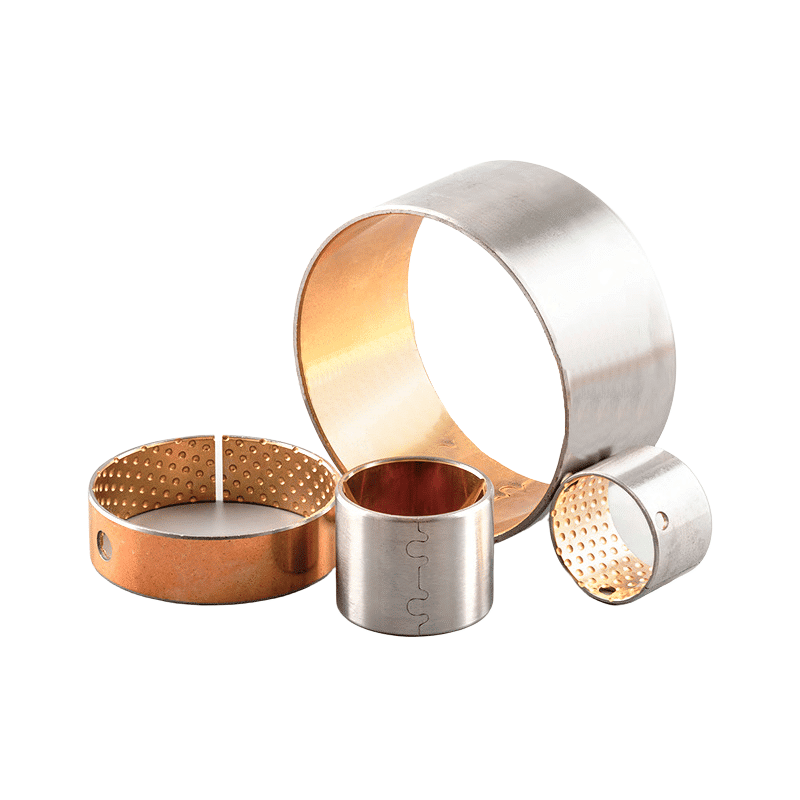
Technical Overview: Metal-Polymer Bushing Solutions for Hydraulic Pumps
1. Structural Composition and Material Science
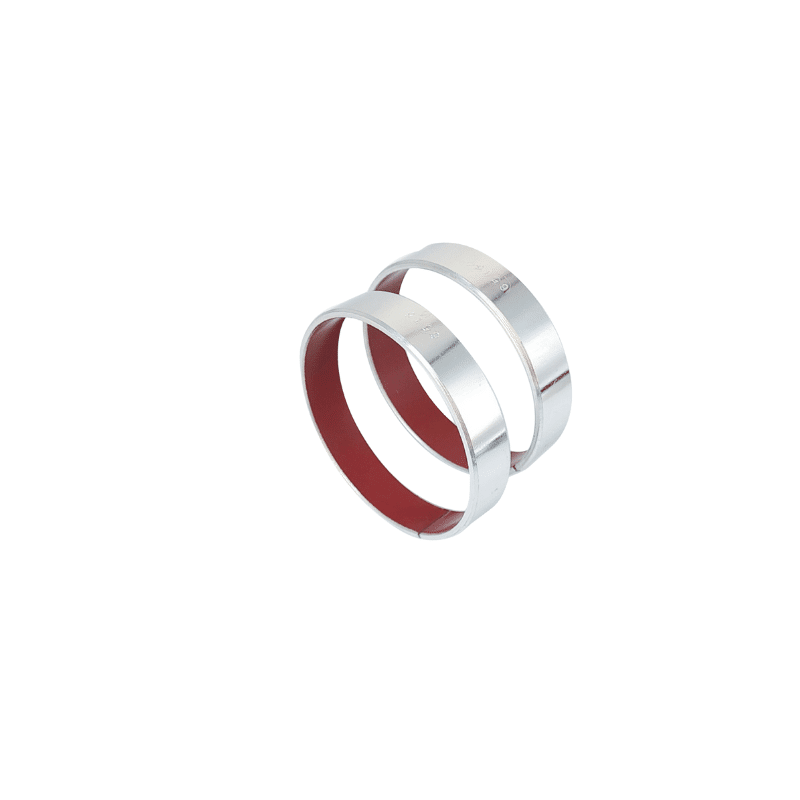
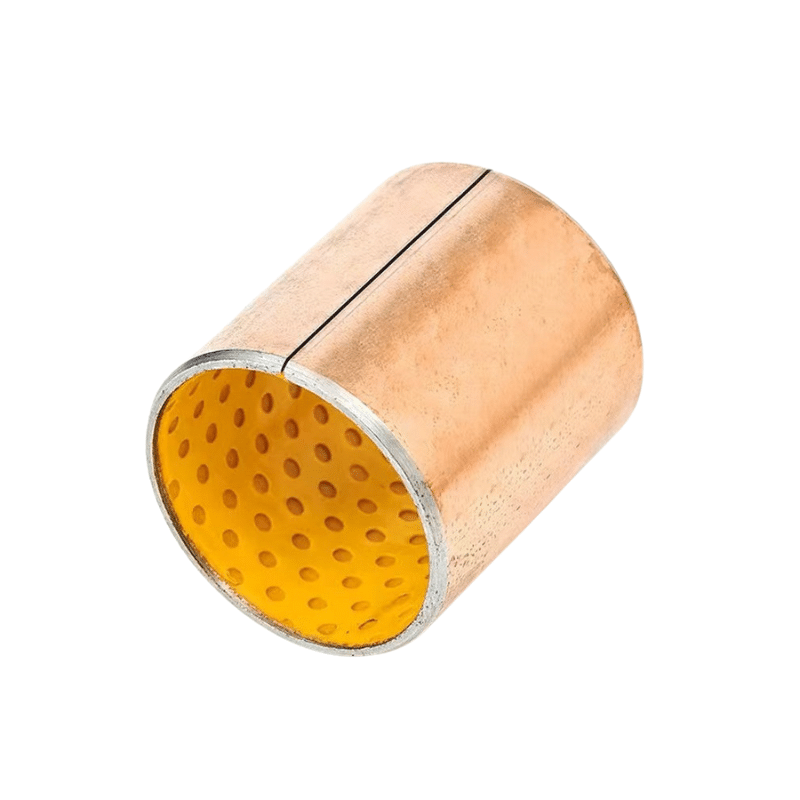
Metal-polymer bushings for hydraulic pumps are engineered as composite systems designed to manage friction and wear in lubricated or marginally lubricated environments. The standard structure typically consists of three integrated layers:
-
Steel Backing: Provides the structural foundation and mechanical strength, allowing for high load-bearing capacity and ensuring a secure fit within the pump housing.
-
Porous Bronze Interlayer: A sintered bronze powder layer that acts as a thermal bridge, facilitating heat dissipation. It also provides a robust mechanical bond for the polymer lining.
-
PTFE-Based Sliding Layer: A functional surface impregnated with polytetrafluoroethylene (PTFE) and specialized fillers. This layer is formulated to provide low friction and wear resistance. Common fillers include:
-
Calcium Fluoride (CaF2): Utilized for chemical stability in environments where glass fillers are unsuitable.
-
Molybdenum Disulfide (MoS2): Integrated to further reduce friction coefficients.
-
Porous Bronze Fillers: Distributed within the PTFE matrix to enhance resistance to creep and pressure.
2. Functional Characteristics
In hydraulic pump assemblies, these bushings perform several functional roles:
-
Friction Reduction: The self-lubricating properties of the PTFE layer minimize energy loss and heat generation during operation.
-
Alignment and Spacing: Maintains precise clearances between internal components, such as gears or pistons, to prevent internal leakage and maintain volumetric efficiency.
-
Self-Lubrication: Effective in submerged or boundary lubrication conditions where a consistent oil film may not always be present.
-
Chemical and Thermal Stability: Capable of operating across a broad temperature range while resisting degradation from various hydraulic fluids and corrosive agents.
3. Engineering Performance Metrics (Reference Values)
The following parameters represent the upper limits of performance under standardized testing conditions:
-
Static Load Capacity: Upper limit of 250 N/mm².
-
Dynamic Load Capacity: Upper limit of 140 N/mm².
-
Allowable Pressure Upper Limit (PV Value):
-
Linear Speed Upper Limit:
-
Friction Coefficient:
-
Operating Temperature Range: -200°C to +280°C.
4. Application Suitability and Selection
The selection of bushing materials is dictated by the specific operational environment of the hydraulic system:
-
Standard Hydraulic Pumps: Steel-backed PTFE bushings with black low-carbon steel liners are frequently utilized for their balance of load capacity and heat dissipation.
-
Submersible and Corrosive Environments: For pumps exposed to water or abrasive media, synthetic materials like Nylon or modified PTFE are often specified. These materials maintain a consistent friction coefficient regardless of moisture levels.
-
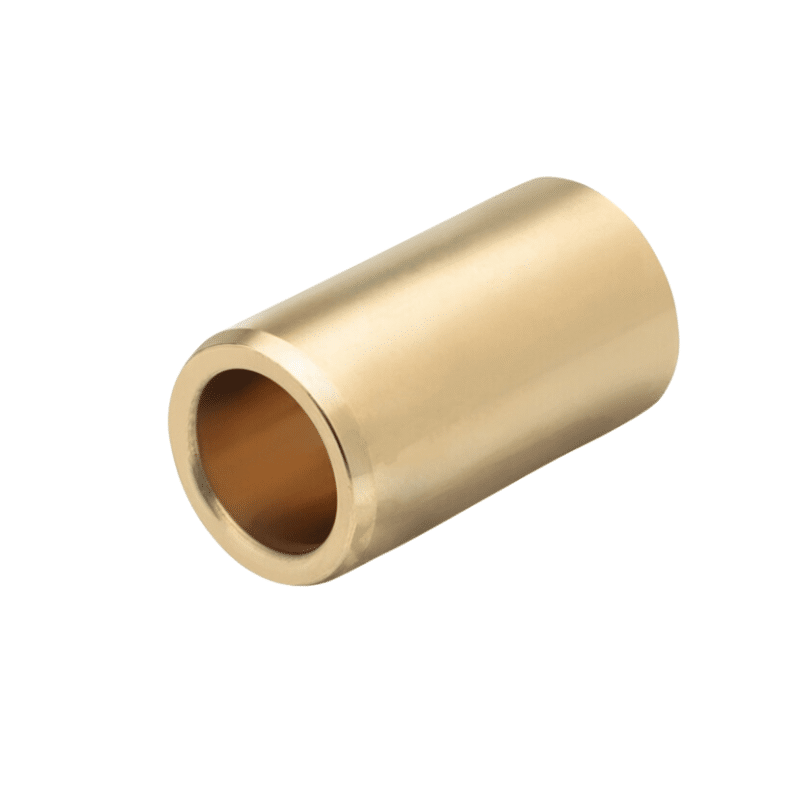
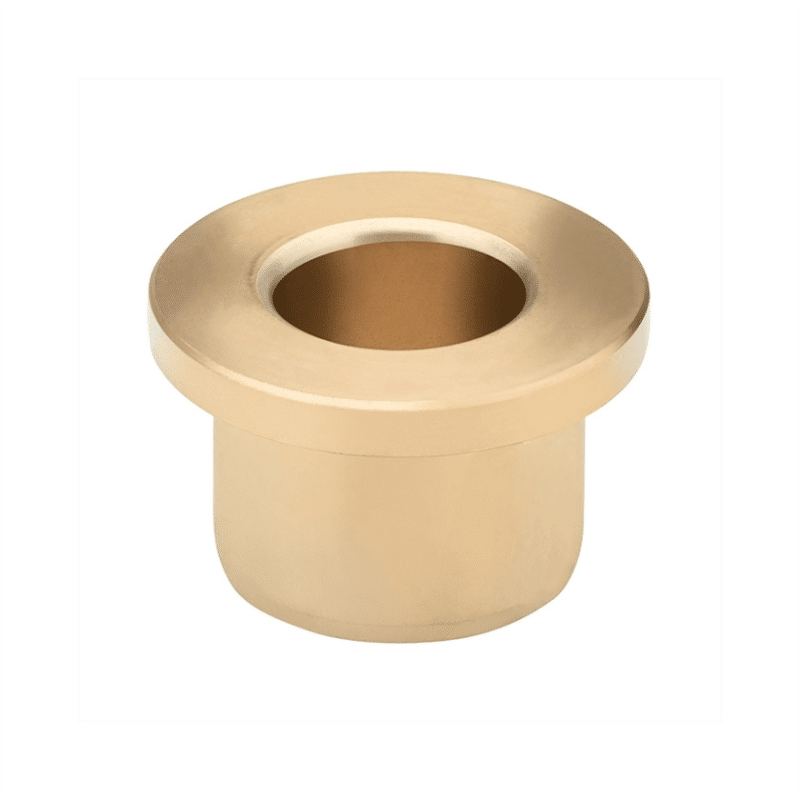
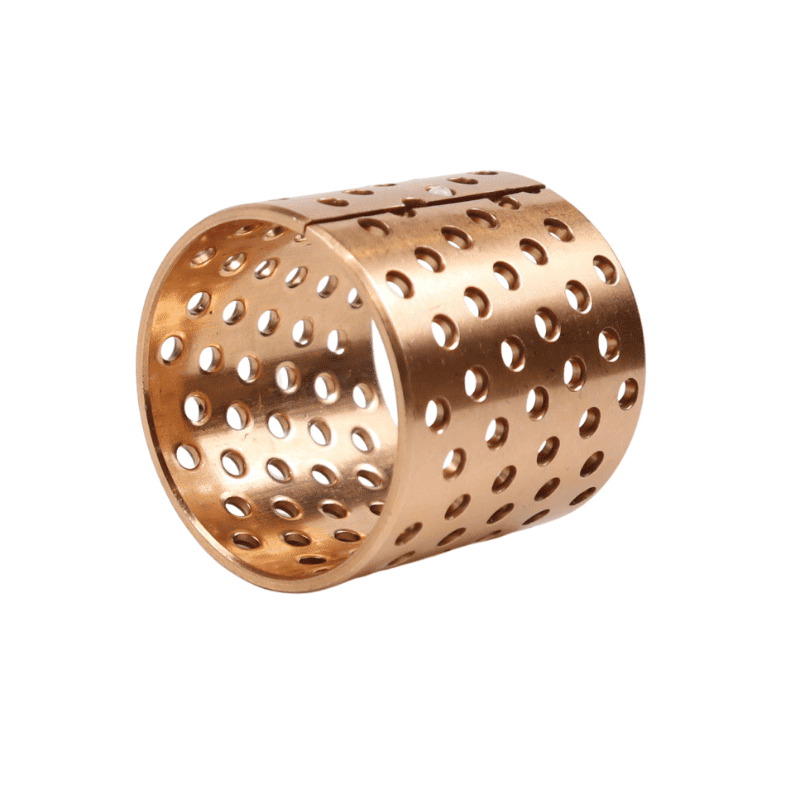
High-Load Applications: Bronze-based bimetal bushings or steel-backed sintered bronze layers are selected for their enhanced resistance to structural deformation under high pressure.
5. Maintenance and Reliability
Self-lubricating metal-polymer bushings are designed to reduce maintenance requirements by eliminating the need for manual greasing. In industrial settings, selecting the appropriate material system can lead to:
-
Reduced operational downtime.
-
Enhanced equipment durability through the prevention of metal-to-metal contact.
-
Improved energy efficiency via lower frictional torque.
For specialized hydraulic applications, including gear pumps, vane pumps, and piston motors, it is recommended to consult technical specifications regarding sizing and chemical compatibility to ensure reliable performance.
Disclaimer: This document is provided for informational purposes only. The technical data and material descriptions are based on standard industrial practices. No warranty, expressed or implied, is given regarding the accuracy of the information for specific applications. Users are responsible for testing and verifying the suitability of these components for their specific equipment and operating environments. This study does not contain conclusions related to military, automotive safety-critical, food-grade, medical, nuclear, or aerospace airworthiness certifications.