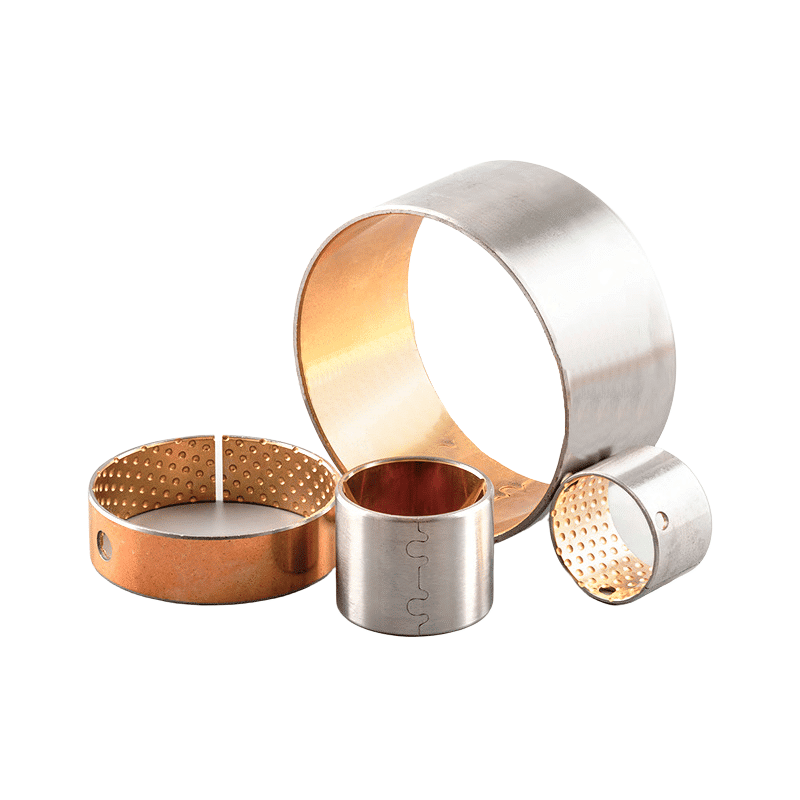
Technical Analysis and Application Guide: Metal-Polymer Composite Thrust Washers (PTFE Lined)
Product Overview
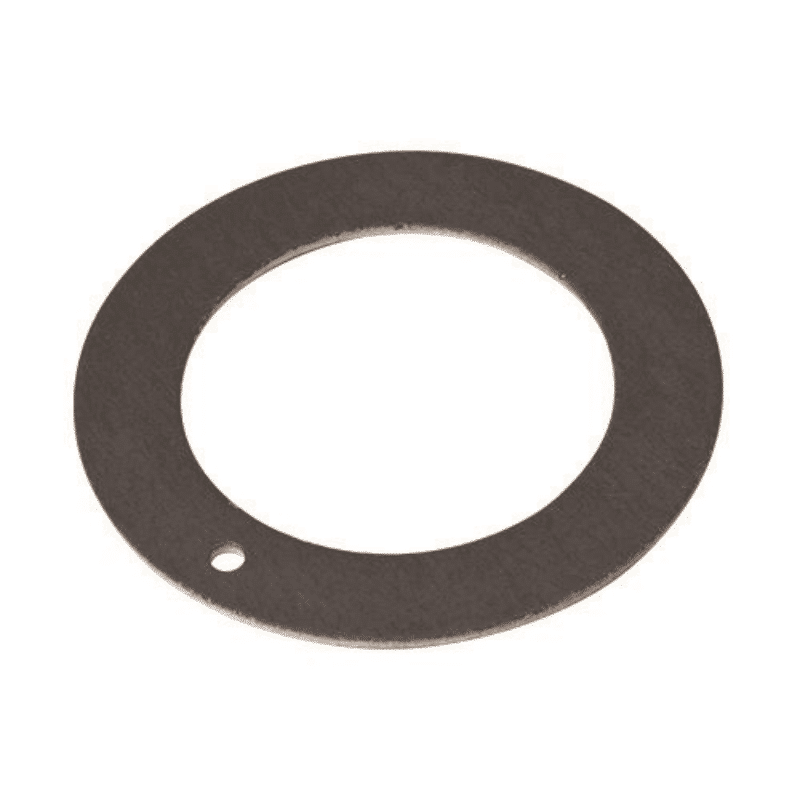
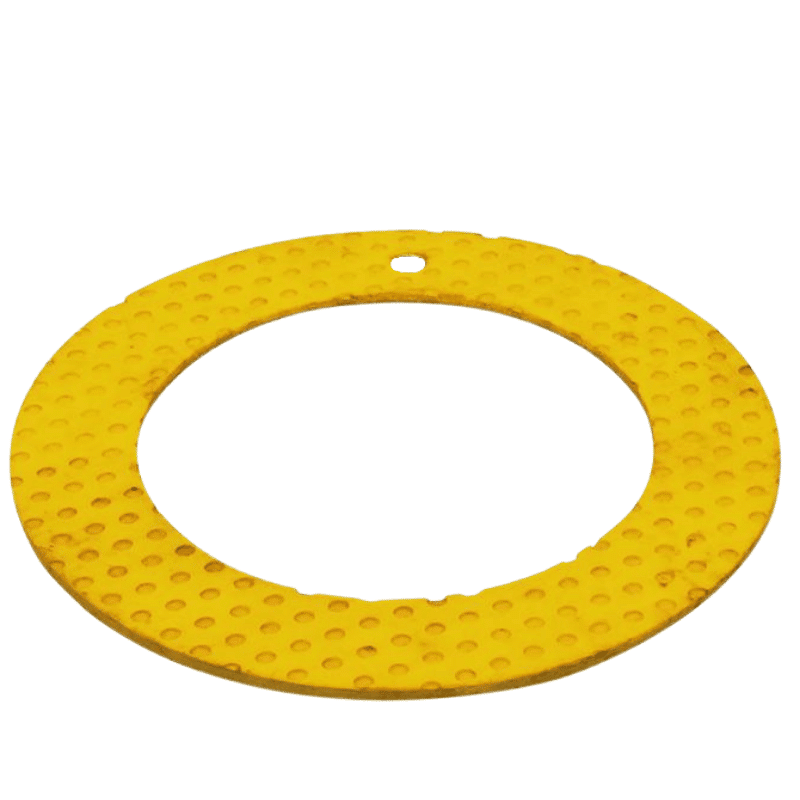
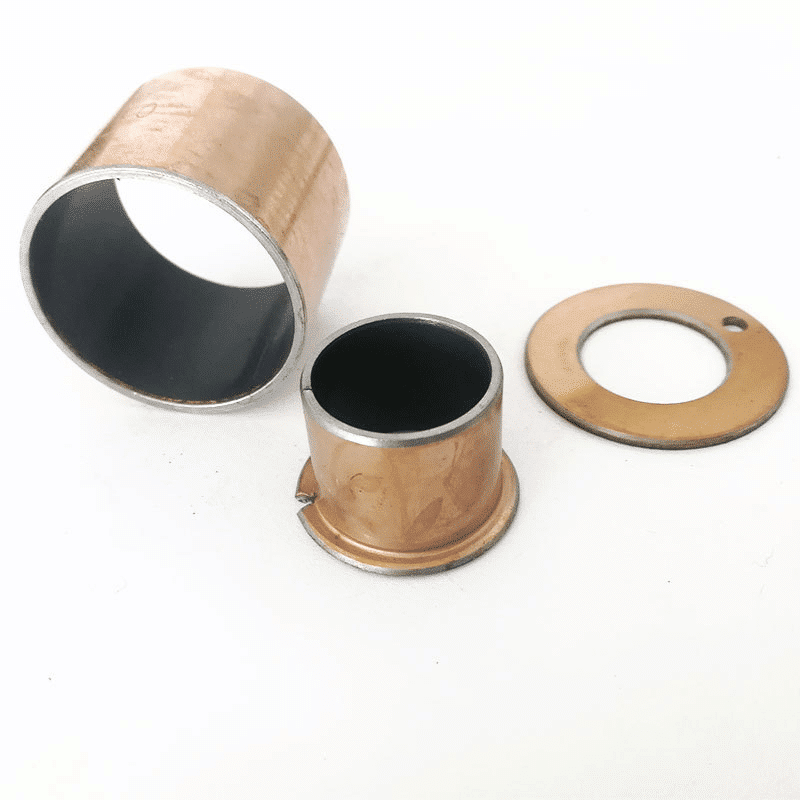
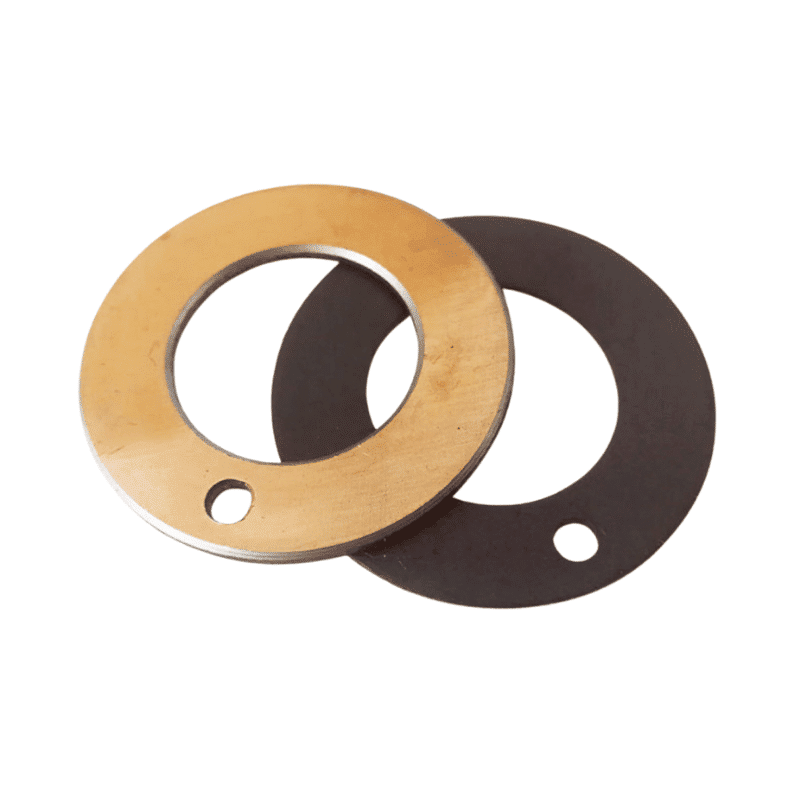
Metal-polymer composite thrust washers are high-performance engineering components designed to manage axial loads parallel to the shaft. Utilizing a multi-layered material structure, these washers excel in dry-running or boundary lubrication environments. By integrating the mechanical strength of steel with the low-friction properties of Polytetrafluoroethylene (PTFE), these components provide a maintenance-free solution for demanding industrial interfaces where conventional lubrication is impractical.
1. Advanced Composite Structure
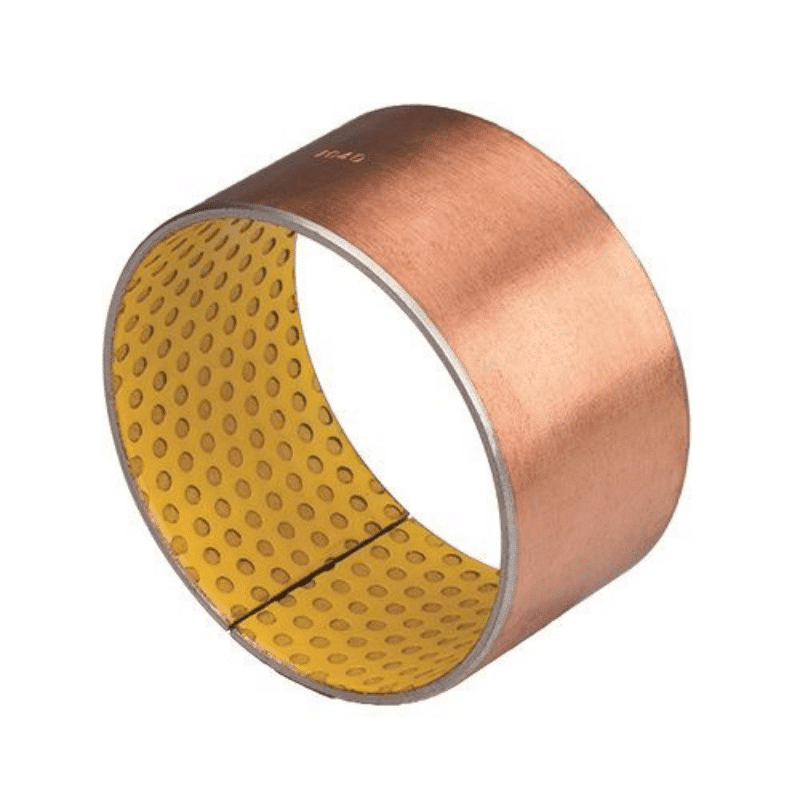
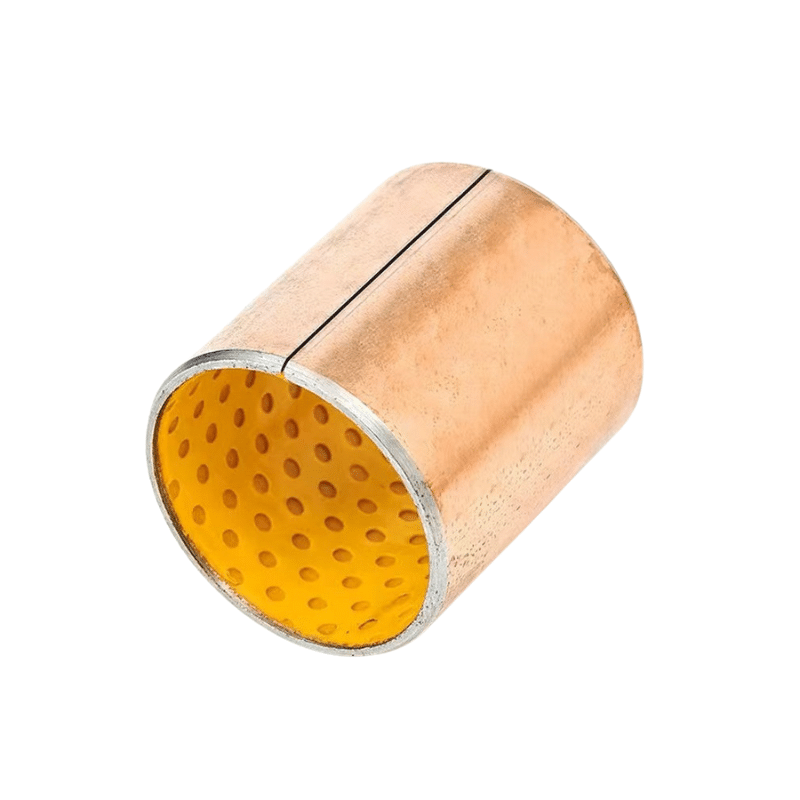
The performance of these washers is derived from a specialized four-layer construction:
-
PTFE/Polymer Functional Layer (0.01–0.03mm): This sliding surface facilitates the creation of a transfer film during the initial “bedding-in” phase. This film coats the mating surface, significantly reducing the friction coefficient and protecting the hardware from direct metal-to-metal contact.
-
Sintered Tin-Bronze Interlayer (0.20–0.35mm): A porous spherical bronze layer that is thermally fused to the steel backing. It acts as a mechanical anchor for the PTFE layer and serves as a critical thermal conductor to dissipate heat away from the bearing surface.
-
Low-Carbon Steel Backing: Provides the foundational structural integrity and load-bearing capacity, ensuring the washer remains dimensionally stable under the allowable pressure upper limit.
-
Anti-Corrosion Surface Treatment: A standard 0.002mm–0.008mm coating of Tin or Copper is applied to the exterior to ensure chemical stability during storage and operation in humid environments.
2. Technical Parameters and Operating Envelopes
To ensure reliable operation, designers should adhere to the following technical thresholds:
-
Allowable Pressure Upper Limit (Static): 250 N/mm²
-
Allowable Pressure Upper Limit (Dynamic): 140 N/mm²
-
Speed Upper Limit (Dry): 2.5 m/s
-
Speed Upper Limit (Lubricated): > 5.0 m/s
-
Operating Temperature Range: -195°C to +280°C
-
Thermal Conductivity: 40 W/mK
-
Friction Coefficient (f): 0.03 – 0.20 (Variables include load, sliding speed, and mating surface roughness).
3. Industry Applications and Engineering Cases
The versatility of PTFE-lined washers makes them a standard choice across various heavy-duty and precision sectors:
-
Fluid Power & Hydraulics: Used extensively in gear pumps and axial piston motors. In these applications, the thin-wall design (typically 1.5mm to 2.5mm) allows for compact housing while resisting the chemical erosion of hydraulic fluids.
-
Agricultural & Construction Machinery: Ideal for kingpins and steering linkages in harvesters and excavators. The bronze interlayer allows for “debris embedding,” where small particles are trapped in the polymer matrix rather than scoring the shaft.
-
Material Handling: Employed in forklift mast pivots and scissor lifts. The self-lubricating nature eliminates the need for frequent manual greasing, reducing operational downtime and environmental contamination.
-
Industrial Automation: Applied in packaging and textile machinery where oil-free operation is mandatory to prevent product spoilage.
4. Standard Dimensional Data (Metric)
Custom dimensions and specialized tolerances are available upon engineering review.
| WC10SF |
10 mm |
20 mm |
1.5 mm |
15 mm |
8 mm |
| WC20SF |
20 mm |
36 mm |
1.5 mm |
28 mm |
18 mm |
| WC32SF |
32 mm |
54 mm |
1.5 mm |
43 mm |
30 mm |
| WC52SF |
52 mm |
78 mm |
2.0 mm |
65 mm |
50 mm |
| WC62SF |
62 mm |
90 mm |
2.0 mm |
76 mm |
60 mm |
5. Installation and Maintenance Protocols
For optimal service life, the following engineering practices are recommended:
-
Housing Preparation: Ensure the seating surface is free of burrs and contaminants. A light film of oil during assembly can prevent corrosion of the housing interface.
-
Alignment and Fixing: If the application involves high vibration, utilize the dowel hole (M) to secure the washer. Ensure the pin head is recessed at least 0.3mm below the sliding surface.
-
Mating Surface: For the longest operational cycles, the mating shaft or plate should have a hardness of HRC 40–50 and a surface finish of Ra 0.4μm or better.
-
Initial Lubrication: While designed for dry use, a small amount of non-MoS2 grease during initial installation can smooth the transition during the transfer film formation.
6. Disclaimer
The data provided in this document is for general engineering reference only. Performance results may vary based on specific environmental variables such as load frequency, abrasive presence, and thermal fluctuations.
Note: This product and its associated technical conclusions do not include certifications for military, automotive, food-grade, medical, nuclear, or aerospace airworthiness applications. Please consult our technical department for industry-specific compliance requirements.