High-Performance Oilless Bushings: Technical Solutions for Industrial Friction
In modern mechanical engineering, reducing maintenance requirements while increasing operational reliability is a key priority. Oilless bushings, or self-lubricating bronze bearings, provide a critical solution for environments where traditional grease or oil lubrication is impractical, costly, or technically unfeasible.
Functional Principles and Lubrication Mechanism
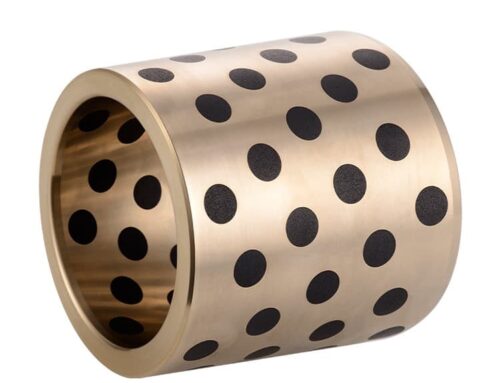
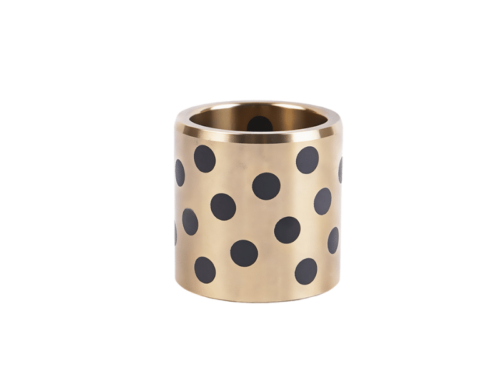
An oilless bushing operates using a composite structure that integrates a high-strength metallic base with embedded solid lubricant plugs.
-
The Transfer Film Process: During the initial start-up phase, the friction between the shaft and the bushing causes a microscopic layer of solid lubricant (typically graphite or PTFE) to be transferred to the mating shaft.
-
Dry Running Stability: This process creates a stable, low-friction interface that separates the two metal surfaces. This mechanism is particularly effective in high-load, low-speed oscillations where traditional hydrodynamic oil films fail to form or are squeezed out.
Specialized Bronze Alloys for Wear Resistance
The performance of an oilless bushing is fundamentally linked to its metallurgical composition. We provide a range of non-ferrous alloys tailored for specific environmental stresses:
-
C86300 Manganese Bronze (SAE 430B): Known for its high tensile strength and ability to support heavy static loads. It is a standard choice for heavy-duty lifting and construction equipment.
-
C95400 Aluminum Bronze: Offers high resistance to oxidation and abrasive wear. This material is widely used in harsh environments where structural integrity must be maintained under constant friction.
-
CuAl10Ni5Fe4 (2.0966): A nickel-aluminum bronze variant that provides high toughness and corrosion resistance, suitable for industrial components exposed to aggressive media.
Technical Parameters and Operational Limits
The application of oilless bushings is governed by engineering limits that ensure thermal stability and a predictable wear rate.
| Engineering Parameter | Value Range (Graphite Plugged Bronze) | Units |
| Allowable Pressure Upper Limit (Static) | 100 – 150 | N/mm² |
| Velocity Upper Limit (Dry) | 0.5 | m/s |
| Operating Temperature Upper Limit | +300 (Graphite) | °C |
| Coefficient of Friction (Typical) | 0.03 – 0.20 | µ |
Note: These limits are subject to variables such as heat dissipation, surface finish, and mating material hardness (recommended HRC 45 or higher for the shaft).
Sector-Specific Applications and Case Data
Heavy Industrial and Construction Machinery
In environments saturated with dust and grit, traditional grease can trap particles and act as a grinding compound. Oilless bushings mitigate this risk by operating as a dry system.
-
Case Example: Implementation in pivot joints of heavy machinery has demonstrated a stabilized wear rate even under shock loads, eliminating the need for automated lubrication systems and reducing maintenance intervals by up to 50% in field tests.
Marine and Hydro-Engineering
Corrosion is the primary failure mode for bearings in maritime applications. Aluminum-bronze based oilless bushings are engineered to withstand these conditions.
-
Case Example: In hydraulic gate assemblies, using CuAl10Ni5Fe4 graphite-plugged bearings prevents grease leakage into the water while maintaining a low friction coefficient during long-term immersion.
General Manufacturing and Tooling
In precision mold and die operations, oil contamination can lead to high scrap rates.
-
Case Example: Standardizing on oilless guide bushings in high-temperature molds allows for clean, repeatable motion at temperatures exceeding 200°C, where conventional lubricants would carbonize.
Design Options and Custom Fabrication
To meet varied engineering requirements, oilless bushings are available in multiple geometries and standards:
-
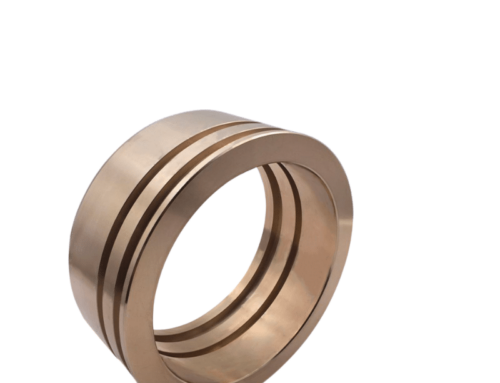
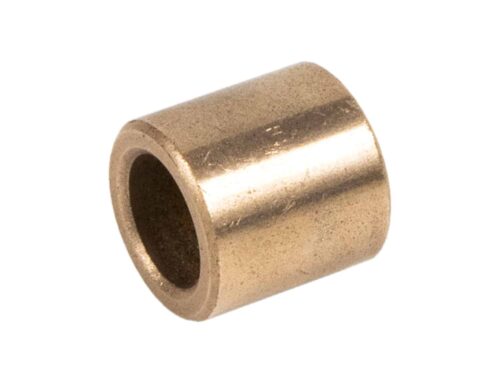
Configurations: Straight sleeve bushings, flanged bushings, thrust washers, and wear plates.
-
Dimensional Standards: Full support for Metric and Inch sizes, including NAAMS standards for industrial tooling.
-
Precision Machining: CNC capabilities allow for custom flange shapes, specific oil groove patterns for hybrid systems, and optimized graphite distributions based on the movement axis (linear, rotary, or oscillating).
FAQ – Frequently Asked Questions
Q: How do oilless bushings maintain a low friction coefficient over time?
A: The solid lubricant is embedded into the bronze matrix. As the shaft moves, the lubricant is released in a self-regulating manner, ensuring the transfer film is maintained throughout the service life of the component.
Q: Is external lubrication ever required?
A: While designed for dry operation, a small amount of initial lubricant during installation can help facilitate the formation of the first transfer film. Once established, they operate without further intervention.
Q: What type of shaft material should be used?
A: To ensure the longevity of the bushing and the shaft, a hardened mating surface (HRC 45+) with a smooth ground finish is recommended. This allows the solid lubricant to adhere correctly without being abraded.
Q: Can these bushings handle submerged operation?
A: Yes. Aluminum-bronze oilless bushings are designed to operate reliably in fresh water, seawater, and certain chemical environments where they offer high resistance to selective leaching and corrosion.
Technical Disclaimer
The information provided in this document is for general industrial guidance only. This content does not contain conclusions or certifications for use in military, automotive, food, medical, nuclear, or aerospace (airworthiness) applications. Users are responsible for validating performance within their specific operating environment. Engineering parameters such as Allowable Pressure Upper Limit and Velocity Upper Limit must be verified against specific mechanical assembly data.